
PADI Scuba Diving
 You may have heard the term PADI related to scuba diving. You may even hold a PADI scuba diving certification without really knowing what PADI is or why that is the certification you hold. But like most things in life, it’s not only a good idea to know who you’re getting your certification from; it’s also interesting.
What is PADI?
PADI stands for Professional Association of Diving Instructors, and PADI is the world’s largest and most popular scuba diver training organization. The organization was born out of a desire to improve scuba diving instruction and a feeling by the founders, John Cronin and Ralph Erickson, that the scuba diving industry needed help. They felt there was not a professional standard of instruction and that learning to dive was too hard.
Thus the Professional Association of Diving Instructors was born with a mission to make scuba diving easier and safer to learn. Over the last 40+ years PADI has become the standard in most regions for diver training.
Over 135,000 PADI instructors now teach scuba diving at over 6,000 resorts and dive shops worldwide. When you go to your local dive shop, or go to a dive outfitter on vacation, you’re probably going to find PADI scuba diving instructors working there. And when you take scuba lessons, odds are you’re going to take PADI courses.
PADI Courses
PADI offers a number of courses for beginning through advanced divers. Some PADI scuba diving courses have online components as well as instructor-led classes. These online courses allow you to get the “book learning” section of the course online and on your own time, reserving your instructor time for learning to dive.
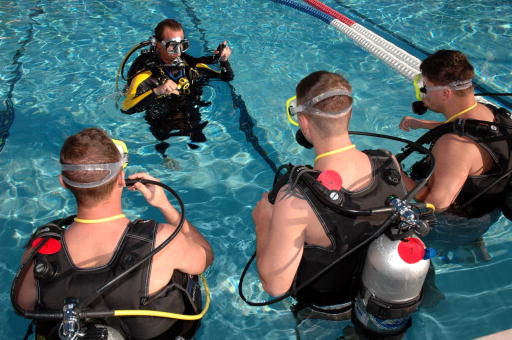
If you’ve never been diving and would like to try it out, the Discover Scuba course is a great class for scuba diving for beginners, and probably where you should start. This easy, short course is offered at most dive shops and resorts for new divers. In this course you’ll learn to breathe underwater and how to wear and use scuba equipment. You’ll also learn some of the basics of scuba diving. And if your Discover Scuba course includes an open water dive, you may get credit toward the PADI Scuba Diver or Open Water Diver courses.
If you’re interested in becoming a certified diver, you’ll want to take the Scuba Diver course, which will get you up and diving in a short time. The Scuba Diver course is a subset of the Open Water Diver course. When you complete the Scuba Diver certified program, you can dive to 40 feet as long as you have a PADI Divemaster, Assistant Instructor or Instructor along with you. You can also upgrade to the PADI scuba diving Open Water Diver certification by taking the remaining courses and doing the remaining dives in the program (which take less time than the first stage, Scuba Diver).
If you’re serious about diving, you’ll want to take the Open Water Diver course. You’ll get the hang of using basic scuba gear, including a dive computer. You’ll learn all about the basics of scuba diving, including the jargon and safety procedures. The Open Water Diver Course includes everything in the Scuba Diver Course and advanced learning and training. You may even be eligible for college credit for your certification.
You can keep going and get certified for Advanced Open Water Diver for deeper diving. You may also want to check out some of the specialty courses like Rescue Diver, Enriched Air Diver, Digital Underwater Photographer, Dive Theory and Adventure Diver.
If your goal is to become a PADI scuba diving pro, you’ll start with Divemaster training. You can become an Assistant Instructor, Open Water Scuba Instructor, Specialty Instructor, or get your Master Scuba Diver Trainer Rating or Master Instructor Rating.
In addition to these common and popular courses, PADI also offers a number of technical diving courses and more advanced specialty courses like Ice Diver, Night Diver, Wreck Diver and Underwater Navigator.
Alternatives to PADI
As you might expect, while PADI is internationally recognized and the most popular of the certification organizations, there are alternatives.
The best-known of these other training organizations is the British Sub Aqua Club (BSAC). BSAC was founded in 1953 and has long been the primary scuba instruction organization in the UK. The group offers comprehensive diver training from beginner through instructor.
BSAC is also the UK National Governing Body for Underwater Activities, and is involved in keeping diving safe and fun for everyone.
Whether you get your training from BSAC in the UK or PADI scuba diving almost anywhere else, the most important thing is that you do study at a certified dive shop. You not only won’t be able to buy gear or get air refills without a recognized certification—your safety is at stake. Scuba diving is fun and exciting, but to avoid the hazards you have to study with a reputable, certified DiveMaster, Assistant Instructor or Instructor.