


Is it possible to make an Artificial Reef out of Costa Rica’s Electrical Grid Waste?
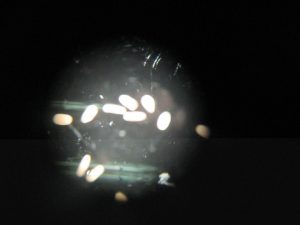
Microscopic view of coral larvae.
Coral reefs start its life cycle as a floating organism called zoaea wandering the seas until it reaches a certain time that it needs to settle down and attach itself to a solid object before it can commence its function as a reef builder.
Yes, the key for coral larvae to survive is a solid structure for attachment eventually developing into a sessile organism where it grows and become to what we know as coral reefs.
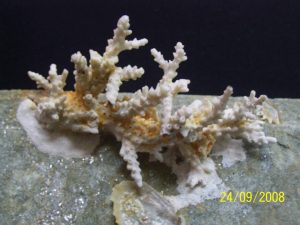
Preserved remains of a juvenile coral showing its attachment to a solid structure.
With this principle and the need to conserve this precious ecosystem, artificial reefs have been introduced to provide a solid space underwater for coral larvae to attach and grow. There have been various designs made and most of them were observed to be effective.
As the number of worn-out car wheels was rapidly increasing, the early days of artificial reefs were made of used tires. Although it proved to be effective as a fish aggregating device, this practice was eventually stopped were studies showed that used tires emit toxic substances thereby polluting the water.
Successful models are now made of concrete. But making these new artificial reef designs entails capital cost in cement and other fabrication cost such as molding. The ideal material for artificial reefs are objects that are already used and considered as waste material. A perfect example of this are shipwrecks were condemned vessels are intentionally and strategically sunk to be encrusted with corals.
The Costa Rican Project
 As for the case of grupo ICE, a government-run Costa Rican Electricity Institute, what they have in mind is to create an artificial reef made of waste material from their electrical grid. The main material to be used in this project are the discarded cylindrical and accordion-shaped porcelain insulators which are the ones you see on top of the utility poles and power stations. These porcelain insulators will be joined together to form a small circular module where several small modules can be attach to form a larger structure.
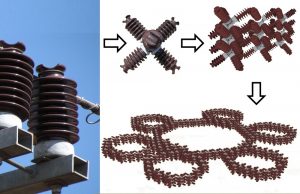
Process flow in making a single porcelain insulator into a modular structure.
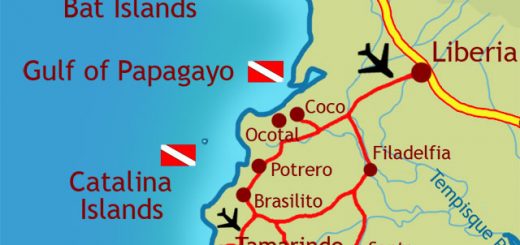
Currently, the first modular structure measuring 6 meters (19 feet) in diameter and 1.3 meters (4 feet) tall is scheduled to be sunk and deployed at Playa Hermosa in Guanacaste at a depth of 28 meters (92 feet). From then on, Marine Biologist from the Environment Ministry and a local group responsible for building artificial reefs called fish condos will monitor and evaluate the structure’s efficiency on coral growth and attraction of reef associated organisms.
Project Concerns and Possible Solutions
At this early stage of the project, there have been speculations whether a material made of ceramic, like porcelain, can facilitate the growth of corals and other living organisms. An observation was presented to answer this speculation claiming that operational porcelain insulators easily attracts living organisms like moss and that the staff have to frequently clean the insulators especially on areas with high humidity. This manifestation can be a negative indicator for coral growth. Let us substitute moss with algae to represent an underwater environment. If porcelain insulators can easily be grown with algae, then corals will have a hard time settling down the porcelain’s surface. Second, if you suggest scraping the algae growing in the insulators, then you may jeopardize coral larvae settlement that goes with the scraping of algae.
What we suggest is to employ the principle of “First come, First Serve” basis. Meaning, timing and strategic location is of the essence. Deploy the modular structures just days before corals will simultaneously spawn and deploy it in an area where you think coral larvae will settle down with reference to the flow of tide and current. This gives corals a chance to settle down first in the modular structure before algae can start to grow. Another thing, while studies shows that coral larvae has a higher chance of attachment in a rough surface, filing the smooth porcelain surface with sand paper or similar material might increase the chance of coral attachment in the structure. This is the reason why cement and rough metals are very efficient in coral settlement. Yes, we know you are worried with the effects of filing the porcelain as it might induce the release of toxic material. Relax, this can be ruled out based on the laboratory test using the MINAE protocol were results confirmed that porcelain insulators do not release toxins and other pollutants.
There is also a concern about the depth to where the structures will be deployed. At 28 meters (92 feet) deep, you can expect that the penetration of sunlight is minimal where sunlight is greatly absorbed as you go deeper. This depth is not viable even on areas with crystal clear water. How much more with the waters surrounding Costa Rica that has a high plankton density causing the water to become slightly turbid. Since we understand that this project is still in its research phase, we suggest that the next batch of modules be deployed in areas with maximum sunlight penetration as the symbiotic zooxanthellae living inside the corals needs sunlight exposure.
At the end of the day, we are not saying that this project is bad nor not good for the environment. In fact, we highly appreciate the initiative of making into good use the supposedly electrical waste material which can end up in storage warehouses or junk shops. Regardless of what had already been done, regardless of whether corals will attach to the structure, we are confident enough that the modular structures will do its secondary function – as a fish attracting device. Further, we are confident that the results of this research will help craft the evolution of artificial reefs made from electrical grid waste.