
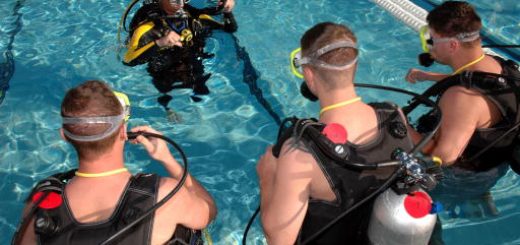


Scuba Diving Equipment
 The right scuba diving equipment is absolutely essential, whether you are a beginning diver or an advanced diver. Every piece must fit right, function correctly, and be in good condition. Worn equipment can not only make a dive unpleasant, it can put your life in jeopardy. Your diver master or dive shop can provide you with all the equipment you need for your dive.
Mask
A dive mask is what allows you to see underwater. The human eye is not constructed to function well underwater and a mask creates a layer of air that allows your eye to function. They are constructed of plastic or glass held in place by rubber. Masks come in a wide variety of shapes and sizes, and can be customized to allow for prescription lenses. Some essentials with masks include a good anti-fog or defogging agent, preferably silicone based. Another essential is a purge valve, that allows you to expel water from inside the mask by blowing out of your nose. This avoids have to manually purge and reseal your mask.
Snorkel
While a basic piece of scuba diving equipment for snorkeling, almost all scuba divers dive with a snorkel for periods of time on the surface of the water, in order to conserve their compressed air. The snorkel is simply a piece of hard tubing with a mouthpiece, and straps onto a dive mask. A one way valve is a must with a snorkel and will shut the tube when covered with water, helping to avoid breathing in any water when using the snorkel.
Fins
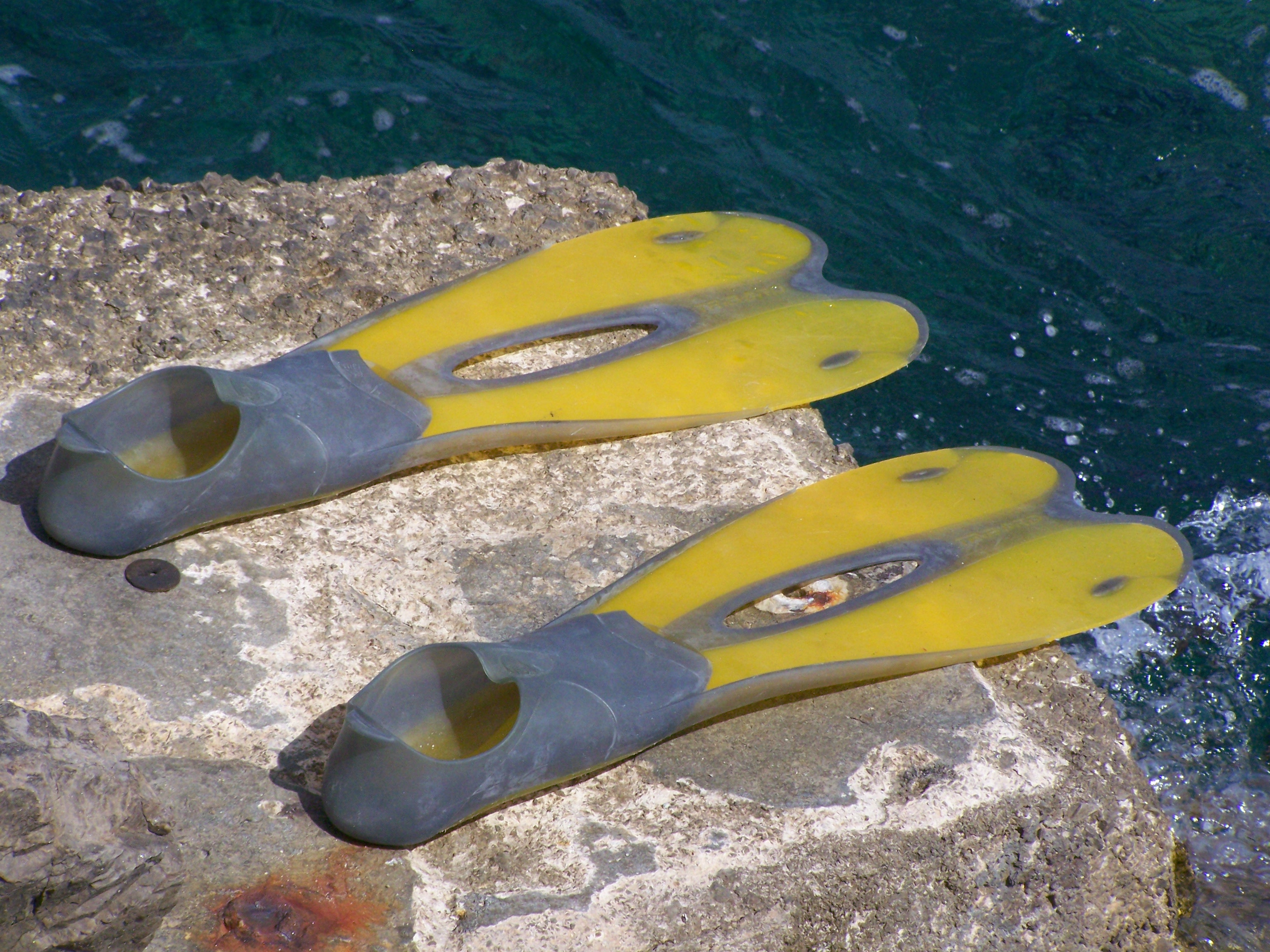
Fins allow a diver to swim through the water efficiently. A diver must overcome a large amount of drag created by their equipment and fins are essential in doing so. Fins can be stiff or flexible, and made of rubber or plastic. Some fins have splits in order to create a propeller like propulsion, while other have channels in them for more efficient paddling. Fins either hook onto the foot directly, or are used with boots.
BC or BCD
The vest that you see most scuba divers wearing is known as the BCD, or buoyancy control device, or BC, the buoyancy compensator. It is built something like a jacket mounted onto a harness. This device is connected to the air tanks through a hose, usually part of the integrated regulator. With this piece of scuba diving equipment, a diver can inflate the BC or BCD to allow them to float or release air allowing them to sink. Modern BC’s or BCD’s also allow for integrated weights, allowing a diver to put weights into convenient pockets to help them sink, as opposed to using a cumbersome and uncomfortable weight belt. The pockets will usually have a quick release cord, in case you have to dump the weights quickly in an emergency.
Regulator/Octopus/Depth Gauge
A dive regulator is part of an integrated package that is used to lower, or regulate, the pressure from an air tank when being inhaled by a diver. A series of valves reduces the highly pressurized and compressed gas in the air tank. A regulator has a first stage, which brings the pressure from the air tank from 3000 psi (pounds per square inch) down to about 150 psi before the air passes into the hose and into the second stage of the regulator. The second stage of the regulator is there to reduce the air pressure even further in order to bring it to the same approximate pressure of the water surrounding the diver.
An octopus is a backup second stage regulator and is found on most integrated scuba diving equipment packages. It is essentially a second regulator in order to have an alternate air source for the diver or for another diver to buddy breathe.
Air Tanks or Air Cylinders
These are aluminum tanks, or occasionally steel, that hold the compressed air used by scuba divers. The measure of air is typically in psi, or pounds per square inch, and usually are filled to 3,000 psi, but can go as high as 4,400 psi. Sometimes the measure will be in bars, which typically range from 200 to 300 bars. An average tank of air will last for about an hour, depending on the depth and experience of the diver. Most air in the tanks is ordinary air, though variations include nitrox, which is a gas mixture that has more oxygen than the normal 21% oxygen found in ordinary air. The nitrox used in scuba diving is often mixed at a rate of 32% or 36% oxygen.
Depth Gauge
Attached to a typical regulator is usually a piece of scuba diving equipment called a depth gauge. The depth gauge, as the name implies, tells a diver how deep they are. Beginning divers usually stay to depths of no more than 60 feet, while advanced divers can go over 100 feet. The deeper a diver is, the faster they will burn through their air. Depth gauges come in both analog and digital versions.
Spare or Pony Bottle
Divers in case of an emergency use a small spare air tank. It is an independent breathing system not tied to the regulator or primary air supply and is probably the most important piece of safety scuba diving equipment.