

Pacific Tarpon
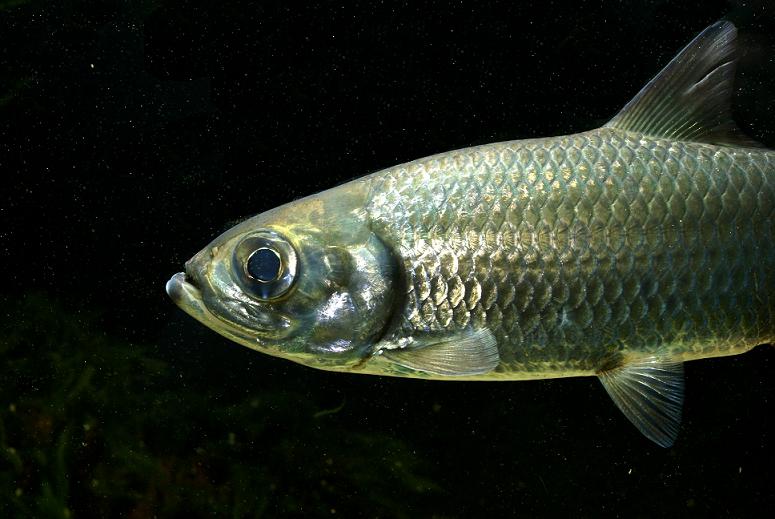
Pacific Tarpon
The Pacific tarpon, colloquially called “oxeye” and scientifically named “Megalops cyprinoides” is frequently found in the waters of the Pacific Ocean. It specifically inhabits coastal areas and water where the salt level is very high. The Pacific tarpon present in the waters of Costa Rica resembles the tarpon found in the Atlantic Ocean. The fish has olive green colors on the upper side of its body and it is silver from the bottom side. The mouth of the Pacific tarpon is in an inverted sickle shape. It slants upwards and the lower jaw has a plate of bone set inside it. The bony plate is elongated in shape and makes the tarpon’s head look even longer than it is. The last ray of the dorsal fin is very long in size; so much so that it almost reaches the tail fins of the Pacific tarpon. The diet of the Pacific tarpon consists of other small fish along with crustaceans. The crustaceans usually include mollusks and crabs. An interesting fact about the Pacific tarpon is that it can store water inside it’s bladder and slowly inhale oxygen from it.
Though the Pacific tarpon’s main homeland is the Pacific Ocean, it is a migratory fish. It migrates from the ocean to inland rivers as soon as it senses the weather changes taking place. Although tarpons are usually fished for in the Atlantic, the Pacific tarpon is famous all over the world and fishermen from everywhere visit Costa Rica just to avail themselves of the spectacular tarpon fishing. Milkfish present in the Pacific resemble tarpons so closely that some of the locals call these milkfish “false tarpons”. These milkfish resembling Pacific tarpons are about 40 inches long, but actual tarpons are bigger in size. Several natives say that Pacific tarpons actually only came into existence after the Panama Canal was built. According to them, the tarpons from the Atlantic migrated to the Pacific Ocean where they slowly started a new family subtype called the Pacific tarpons. It is said that this migration happened through the newly built Panama Canal. This theory also supports the fact that tarpons can exist in brackish water and freshwater both. This way, it could live in the Atlantic along with the tropical waters like the Pacific Ocean. But even here a small problem exists. Full grown tarpons can easily inhabit freshwater in the tropical lands like Costa Rica but baby tarpons are another matter. Baby tarpons best grow in saltwater and the Atlantic. The warmer waters of the Pacific Ocean appear to be not conducive to the growth of baby tarpons. Baby tarpons are very small when they are born and some studies have suggested that they can be as tiny as 2 inches when born! Considering that small size, it stands to reason that they would have difficulty growing in the climate of Costa Rica and the Pacific Ocean. Some tarpons have started laying larvae in different lagoons where the babies can start growing easily without fear of dying or being devoured by dangerous predators.
Video for Pacific Tarpon
Reference
http://www.ticotimes.net/Weekend/Fishing/Tarpon-on-the-Pacific-Coast-You-betcha_Friday-July-08-2011